
UFL News
By Samantha Jones and Meredith Bauer-Mitchell
Published June 5, 2026
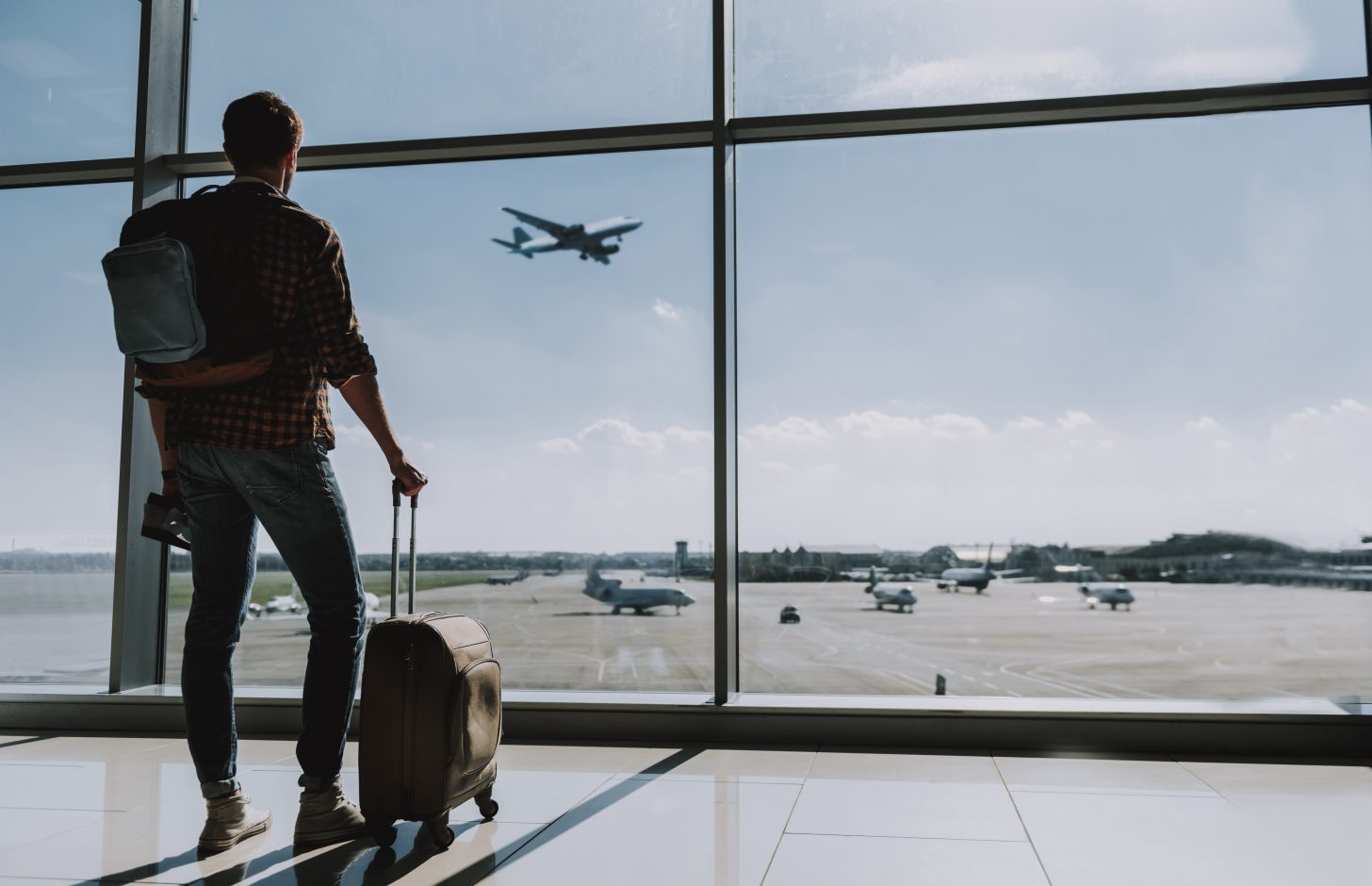
UF researchers are using AI and digital twin technology to test simulated airport operations, aiming to reduce delays, improve efficiency and strengthen resilience. The National Science Foundation-funded study simulates flights, passengers and baggage, helping airports run more smoothly from parking to takeoff. Engineers from UF/IFAS are using tools typically seen when studying animal migration, ecosystems or the flow of rain. Airports can be frustrating. Between long lines, complicated security protocols and lost baggage, a fun vacation or an important work trip can easily become a stressful experience.
The Strategic Partnerships for Enhancing Airport Resilience (SPEAR) study is being done by faculty from UF Institute of Food and Agricultural Sciences (UF/IFAS) Department of Agricultural and Biological Engineering (ABE) and is funded by the National Science Foundation. The team is using the Dallas Fort Worth International Airport as its model testing ground, creating digital twin simulations that allow researchers to test all the moving parts of an airport: incoming and outgoing planes, people arriving and departing, traffic, baggage, security, employees moving into protected areas, machine maintenance and more. The complex and ever-changing nature of an airport as large as Dallas Fort Worth International Airport – which serves about 86 million passengers a year – helps show how biological engineering can help the aviation industry.
The research is unique because biological engineers are using techniques usually used to predict the behavior of living systems, like wildlife or crop production, to create a plan to manage lines of people, baggage and flights – and to anticipate how outside factors will affect them.
Biological engineers are uniquely qualified to help with this problem. They handle ever-changing, complex issues like animal migration, natural impacts like rain on watersheds and many other factors that might appear uncontrollable but can be predicted and mitigated or overcome with the right plan. In an airport, dynamics like cyber attacks, heat waves, blizzards, storm surges and communications interruptions can require a new logistical plan at the airport.
Not only does this research help identify and prevent problems, but it helps with adaptation and resilience when problems arise, said Greg Kiker, UF/IFAS ABE chair. “It is about bouncing back. But to bounce back, you have to understand your systems. You have to build stronger systems, and you have to build in recovery,” Kiker said. The objective is to help airports balance their three primary goals: safety, efficiency and customer service. Safety must alwayscome first, and there must be a balance between efficiency and customer service, he said.
The research team includes the following ABE faculty members: Medeiros, Kiker, Ziynet Boz, Rafael Muñoz-Carpena and Nargiza Ludgate.

